Having a LinkedIn profile is no longer enough. With millions of professionals, freelancers, business owners, and recruiters using LinkedIn every day, simply creating a profile and waiting for opportunities to arrive rarely works.
If you want to attract clients, recruiters, collaborations, or business opportunities, your profile needs to be discoverable.
This is where LinkedIn SEO comes in.
LinkedIn SEO is the process of optimizing your profile and content so that you have a better chance of appearing in relevant LinkedIn searches. The good news? You don’t need to be an SEO expert to improve your visibility.
Here are seven common LinkedIn SEO mistakes that could be making your profile harder to find—and how to fix them.
1. Your Personal Profile Doesn’t Use the Right Keywords
One of the biggest LinkedIn SEO mistakes is creating a profile without thinking about the words people actually search for.
For example, if you’re a freelance website designer, simply writing “Freelancer” in your profile doesn’t tell LinkedIn—or potential clients—what you actually do.
Instead, consider relevant phrases such as:
- Freelance Website Designer
- WordPress Website Designer
- SEO Specialist
- Digital Marketing Freelancer
- Website Development
- Search Engine Optimization
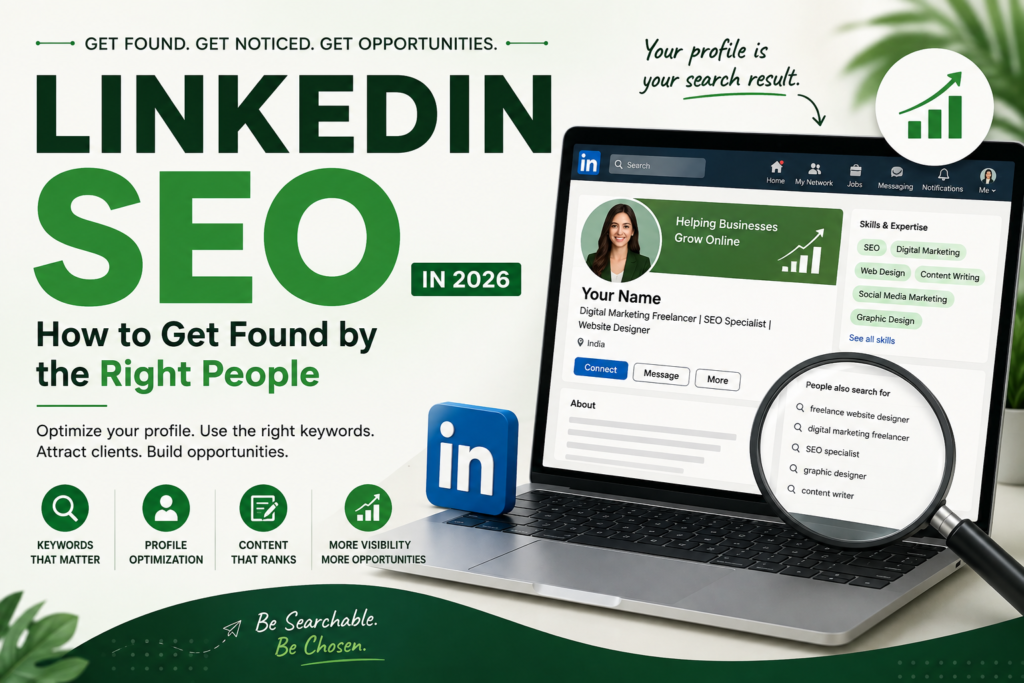
Your keywords should naturally appear in important sections such as your headline, About section, experience, and skills.
Don’t stuff your profile with keywords. Use terms that accurately describe your expertise and the services you offer.
2. Your LinkedIn Headline Is Too Generic
Your headline is one of the most valuable areas of your LinkedIn profile.
A headline such as “Freelancer | Open to Work” tells visitors very little about your expertise.
Instead, make your headline specific and searchable.
For example:
Freelance Website Designer | SEO & Digital Marketing Specialist | Helping Businesses Build a Strong Online Presence
This communicates three important things:
- What you do
- What you’re skilled at
- The value you provide
Your headline should be written for humans first, but it should also contain relevant keywords that potential clients or recruiters may search for.
3. Your About Section Is Missing Search-Friendly Language
Your About section shouldn’t simply be a list of achievements.
It is an opportunity to explain who you help, what you do, what problems you solve, and what makes your approach different.
Naturally include your primary keywords throughout the section.
For example, instead of saying:
“I help businesses grow online.”
You could make it more specific:
“I help small businesses improve their online presence through website design, SEO, digital marketing, and content strategies.”
The second version gives LinkedIn and your audience much more context.
Keep the writing natural. Keyword stuffing can make your profile difficult to read and may make your personal brand feel less authentic.
4. Your Experience Section Is Too Vague
Another common LinkedIn SEO mistake is treating the Experience section like a traditional resume.
Simply writing a job title and company name doesn’t provide much information about your expertise.
Use your experience descriptions to explain what you actually worked on.
For example, instead of:
Try:
Digital Marketing Freelancer – SEO, Content Marketing, Social Media & Website Optimization
Then describe your responsibilities, projects, results, and areas of expertise.
Include relevant keywords naturally while explaining your actual work.
This can help create a stronger connection between your profile and the services or expertise you’re trying to be discovered for.
5. You’re Ignoring the Skills Section
Your Skills section is another opportunity to reinforce your professional expertise.
Choose skills that are genuinely relevant to your work.
For someone working in digital marketing, these might include:
- Search Engine Optimization (SEO)
- Digital Marketing
- Social Media Marketing
- Content Marketing
- Website Development
- WordPress
- Graphic Design
- Search Engine Marketing
Don’t add every skill you can think of just to fill the section.
A focused list of relevant skills creates a clearer professional identity.
You can also ask colleagues, clients, or professional connections to endorse skills they have genuinely seen you use.
6. You’re Not Creating LinkedIn Content
Optimizing your profile is only one part of LinkedIn SEO.
If you want to increase your visibility, you also need to demonstrate your expertise through content.
Share useful insights, lessons, opinions, case studies, industry observations, and practical tips related to your niche.
For example, if you’re an SEO professional, you could create posts about:
- Common SEO mistakes
- Google search updates
- Keyword research
- Technical SEO
- AI and SEO
- Content marketing
- Website optimization
Use relevant keywords naturally in your posts and write content that encourages meaningful conversations.
You don’t need to post every day. Consistency and usefulness are more important than simply publishing more content.
7. Your Profile Isn’t Written for Your Ideal Audience
Perhaps the biggest LinkedIn SEO mistake is optimizing your profile only for LinkedIn’s search system.
Remember: people are going to read your profile.
A profile can contain all the right keywords and still fail if it doesn’t communicate value.
Think about the person you want to attract.
Are you looking for:
- Freelance clients?
- Recruiters?
- Business owners?
- Collaborations?
- Speaking or training opportunities?
Then write your profile around their needs.
Instead of only listing what you can do, explain how your expertise can help them.
For example:
“I design business websites and create SEO strategies that help brands build a stronger and more discoverable online presence.”
That’s more meaningful than simply listing services.
A Simple LinkedIn SEO Checklist
Before you consider your LinkedIn profile optimized, check these areas:
- Your headline contains relevant keywords.
- Your About section clearly explains what you do.
- Your Experience section includes specific responsibilities and expertise.
- Your Skills section reflects your core services.
- Your profile clearly communicates who you help.
- Your profile uses keywords naturally rather than repeatedly.
- You regularly share useful content in your niche.
- Your profile information is complete and up to date.
Final Thoughts
LinkedIn SEO isn’t about filling your profile with keywords or trying to manipulate the algorithm.
It’s about making your professional expertise clear, relevant, and discoverable.
Start by identifying the phrases your ideal clients, recruiters, or business connections might use when searching for someone with your skills. Then incorporate those keywords naturally throughout your profile while keeping your content genuinely useful.
Your LinkedIn profile isn’t just an online resume. It can become a powerful part of your personal brand, professional visibility, and client acquisition strategy.
If your profile currently isn’t attracting the opportunities you want, don’t immediately assume LinkedIn isn’t working. Sometimes, the problem isn’t your expertise—it’s that the right people simply aren’t finding you.

One Comment