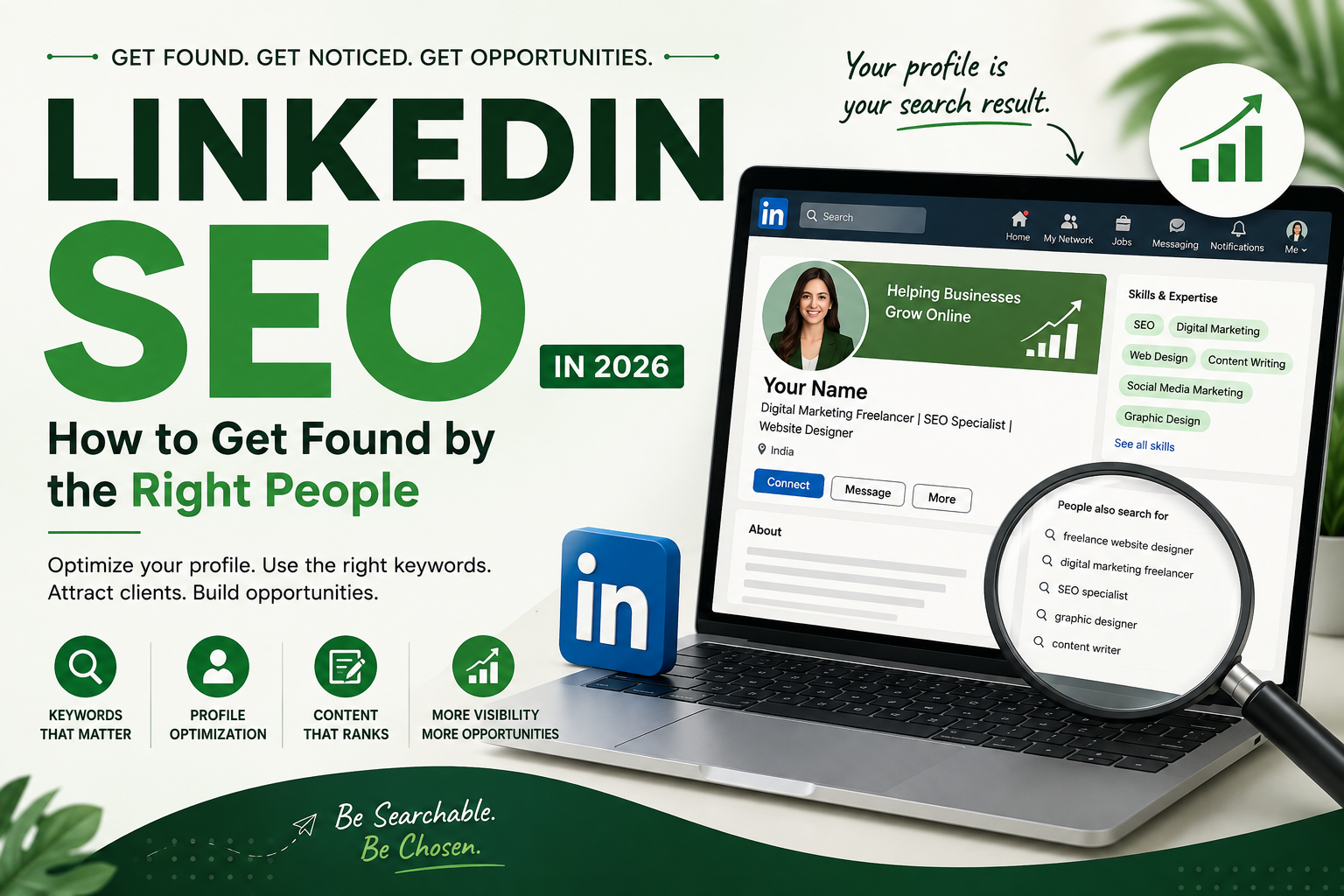
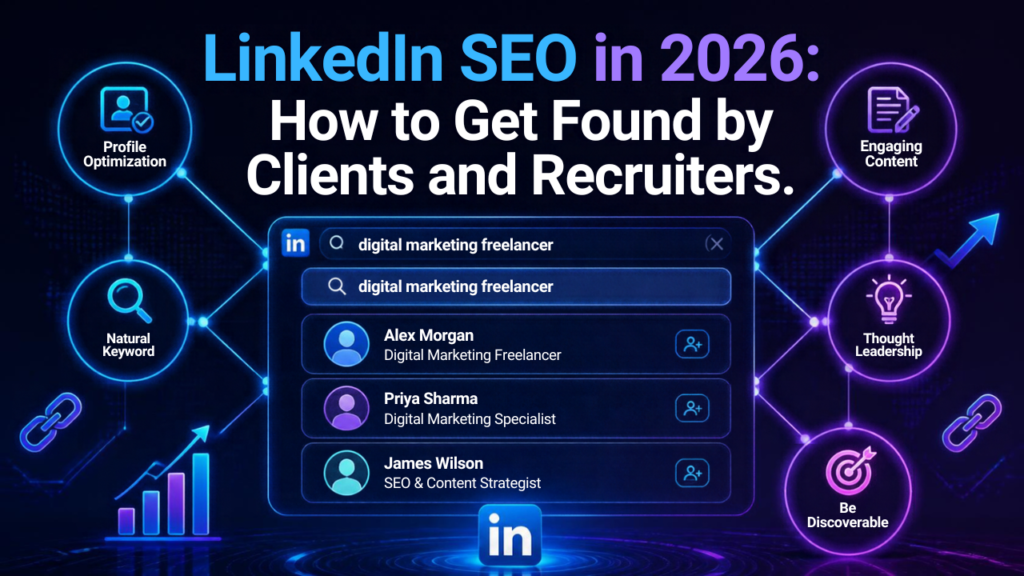
LinkedIn is no longer just a platform for sharing your professional updates or looking for jobs. In 2026, it has become a powerful search and discovery platform where clients, recruiters, business owners, and potential collaborators can find you.
But simply having a LinkedIn profile isn’t enough.
If you want the right people to discover your profile, you need to think about LinkedIn SEO.
LinkedIn SEO is the process of optimizing your profile and content with relevant keywords, so you appear in LinkedIn searches and become more discoverable through search engines like Google.
Whether you are a freelancer, entrepreneur, digital marketer, or professional, optimizing your LinkedIn presence can create valuable opportunities.
What Is LinkedIn SEO?
LinkedIn SEO means optimizing your LinkedIn profile and content so that you have a better chance of appearing when people search for specific skills, services, or professionals.
For example, if someone searches for:
- Freelance website designer
- Digital marketing freelancer
- SEO specialist
- Graphic designer
- Content writer
LinkedIn needs to understand what you do before it can connect your profile with relevant searches.
That’s why the words you use throughout your profile matter.
The goal isn’t to stuff your profile with keywords. Instead, use relevant keywords naturally where they make sense.
1. Start With Your LinkedIn Headline
Your headline is one of the most important areas of your LinkedIn profile.
Instead of simply writing:
Freelancer | Digital Marketing
Make your headline more descriptive and searchable.
For example:
Freelance Website Designer | Digital Marketing Freelancer | SEO & Graphic Design
This immediately tells visitors what you do while naturally incorporating relevant search terms.
Your headline should answer one simple question:
What do you help people with?
Make it clear, specific, and relevant to the audience you want to attract.
2. Optimize Your About Section
Your About section gives you more space to explain your experience, skills, services, and the problems you solve.
Don’t treat it like a traditional resume.
Write it for humans first, while naturally including keywords that describe your expertise.
For example, if you provide website development, SEO, digital marketing, and graphic design services, mention those services naturally within your story.
You can include phrases such as:
freelance website designer, freelance SEO specialist, digital marketing freelancer, graphic designer freelancer, web designer freelancer, and content writer.
Avoid repeating the same keyword unnecessarily. Keyword stuffing can make your profile sound unnatural and difficult to read.
3. Use Keywords in Your Experience Section
Your Experience section is another opportunity to improve your LinkedIn SEO.
Don’t only write your job title and company name.
Explain what you actually do.
For example, instead of:
Freelancer
you could write:
Freelance Website Designer & Digital Marketing Specialist
Then describe the services, projects, skills, and results associated with your work.
Think about the words your ideal client would type into LinkedIn when looking for someone like you.
Those are the words you should naturally incorporate into your profile.
4. Don’t Ignore the Skills Section
LinkedIn’s Skills section can also help communicate your professional expertise.
Add skills that are genuinely relevant to your work.
For a digital professional, these might include:
- Search Engine Optimization
- Digital Marketing
- Website Development
- Web Design
- Graphic Design
- Content Writing
- Social Media Marketing
- WordPress
- Photoshop
Choose skills that accurately represent what you offer rather than adding every possible keyword.
5. Create Content Around Your Expertise
LinkedIn SEO isn’t only about your profile.
Your content matters too.
Regularly publishing useful posts helps establish your expertise and gives LinkedIn more context about the topics you discuss.
For example, if you want to be discovered for SEO, don’t only post promotional content.
Share practical insights such as:
“5 SEO mistakes small businesses should avoid”
or
“Why your website isn’t ranking on Google.”
Similarly, if you’re a website designer, share website tips, design insights, case studies, and practical advice.
The more consistently you demonstrate expertise around a topic, the clearer your professional positioning becomes.
6. Focus on Search Intent
One of the biggest mistakes people make with SEO is focusing only on keywords.
Keywords matter, but search intent matters more.
Ask yourself:
What is my ideal client actually searching for?
A business owner may not search for “freelancer.”
They might search for:
- How to improve my website
- SEO expert for small business
- Website designer for my business
- How to get more leads online
- Digital marketing services
Understanding these problems can help you create better LinkedIn content and position your services more effectively.
7. Build a Strong Personal Brand
LinkedIn SEO can help people find you, but your profile needs to give them a reason to remember you.
That’s where personal branding comes in.
Your profile should clearly communicate:
Who you help + What you do + What makes your approach different.
Use a professional profile photo, clear headline, compelling About section, relevant Featured content, and consistent content themes.
Your goal isn’t simply to get discovered.
It’s to turn that discovery into trust.
8. Make Your Profile Client-Focused
If you’re a freelancer, your LinkedIn profile shouldn’t read like a list of everything you’ve ever done.
Think about your ideal client.
What problem are they trying to solve?
If they’re a freelance website designer, they may want a website that looks professional and generates leads.
Freelance SEO specialist, they may want more organic traffic and visibility.
Digital marketing freelancer, they may want help growing their online presence.
Speak directly to those needs.
9. Stay Consistent
LinkedIn SEO isn’t a one-day task.
You can optimize your profile today, but building visibility takes consistency.
Keep updating your profile as your skills evolve. Publish useful content regularly. Engage thoughtfully with other professionals. Share your experience and answer questions within your area of expertise.
You don’t need to post every day.
You need to provide value consistently.
Final Thoughts
LinkedIn SEO in 2026 is about much more than adding keywords to your profile.
It’s about making your expertise clear, searchable, useful, and trustworthy.
Start by optimizing your headline and About section. Add relevant skills and experience. Create content around the problems your audience is searching for. Most importantly, build a profile that speaks to real people rather than trying to satisfy an algorithm.
Whether you’re a freelance website designer, digital marketing freelancer, freelance SEO specialist, graphic designer freelancer, web designer freelancer, or content writer, LinkedIn can become a valuable channel for building visibility and attracting opportunities.
Remember:
Don’t optimize your LinkedIn profile just to be found. Optimize it to be remembered.
And once the right people find you, make sure your website gives them the next reason to connect with you.

3 Comments