For a long time, I thought a career had to follow a certain path.
Get the right degree.
Get the right job.
Gain experience.
Then move forward.
But the digital world doesn’t always work that way.
Today, someone can learn SEO from home, build a website, create content, manage social media, work with AI tools, and eventually start working with real clients—all without having a traditional marketing degree.
So, can you learn digital marketing without a degree?
Yes.
But there’s an important part people sometimes leave out:
You don’t need a marketing degree, but you do need practical skills.
And those skills come from learning, experimenting, making mistakes, and actually doing the work.
What Do You Actually Need to Learn?
Digital marketing is a broad field. You don’t have to master everything at once.
Start by understanding the major areas:
- SEO
- Content marketing
- Social media marketing
- Website optimization
- Email marketing
- Paid advertising
- Analytics
- AI tools
You can explore all of these and eventually decide which areas interest you most.
For example, some people enjoy SEO and eventually work as a freelance SEO specialist. Others enjoy writing and become a content writer. Some prefer social media, paid advertising, website designing, or a combination of several skills.
There isn’t one correct path.
Start With the Basics, Not Everything
One mistake beginners often make is trying to learn everything at the same time.
They watch an SEO tutorial in the morning, start learning Google Ads in the afternoon, watch Instagram marketing videos at night, and then wonder why everything feels confusing.
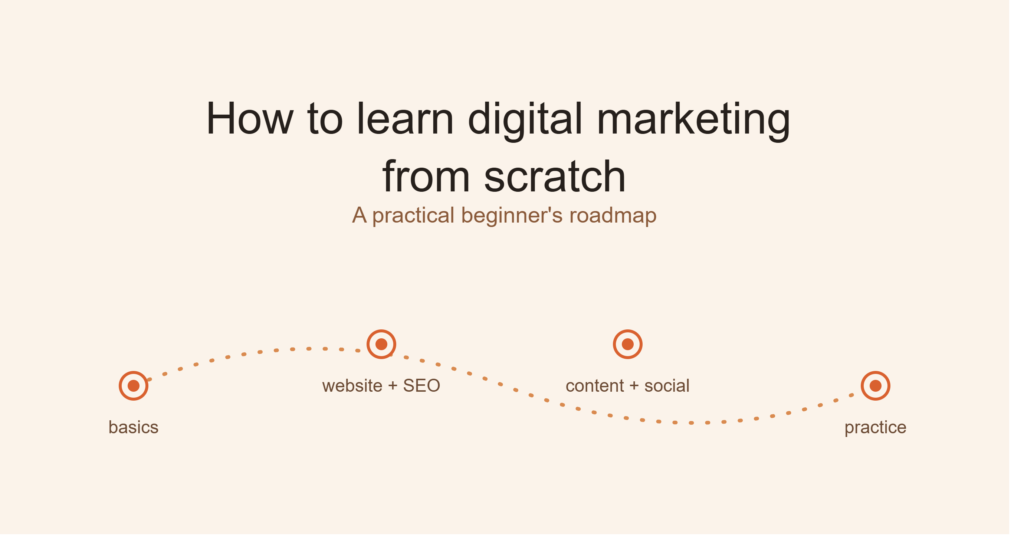
I’ve found that learning becomes much easier when you follow a sequence.
Start with digital marketing fundamentals.
Then learn how websites work.
After that, move into SEO and content.
Then explore social media, analytics and paid advertising.
Once you understand the basics, start experimenting with AI tools.
The goal isn’t to know everything.
It’s to understand how the different pieces fit together.
Learn Website Basics
Even if you don’t want to become a developer, understanding website designing can be extremely useful for a digital marketer.
Why?
Because your website is often at the center of your online marketing.
You should understand things like:
- How a website is structured
- How users navigate it
- What makes a good landing page
- Basic SEO elements
- Page speed and mobile usability
- Calls to action
- How search engines discover pages
You don’t need to become a professional developer.
But knowing how websites work can make you a much more confident marketer.
Learn SEO by Actually Practicing It
SEO is one of those skills that makes much more sense when you stop reading about it and start doing it.
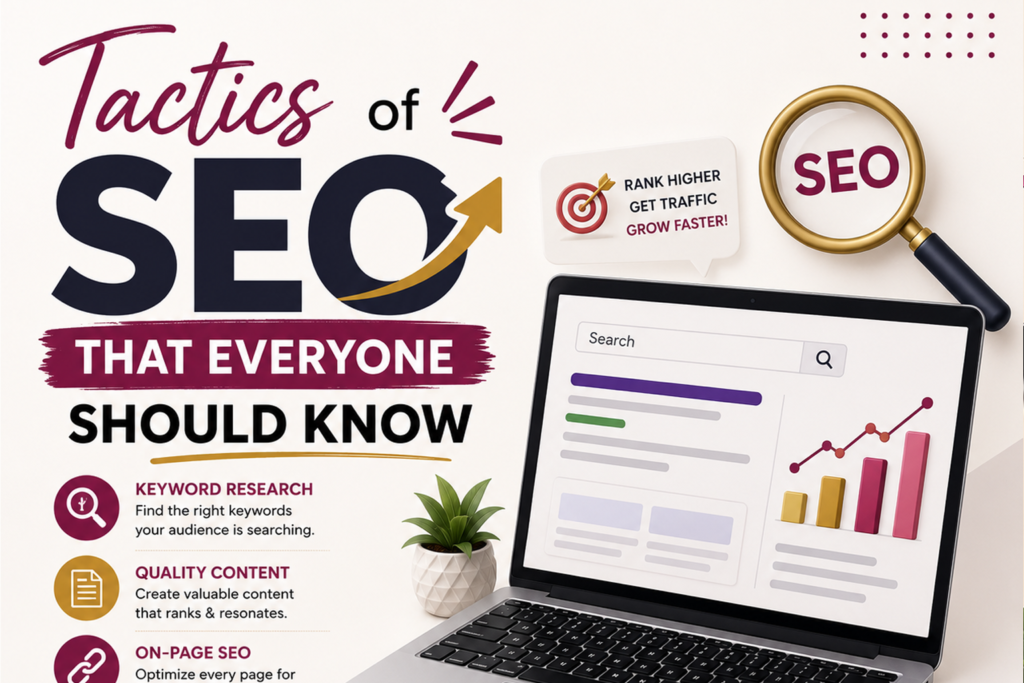
Learn about keywords, search intent, on-page SEO, internal links, technical basics and content optimization.
Then create something.
- Start a small website or blog.
- Choose a topic.
- Write an article.
- Optimize it.
- Submit it to Google Search Console.
- Watch what happens.
- Look at the queries and impressions.
- Improve the content.
Do it again.
That’s how theory turns into experience.
And if you eventually want to work as a digital marketing freelancer, being able to explain what you actually did is much more valuable than simply saying you’ve completed a course.
Don’t Underestimate Content Writing
You don’t have to become a professional writer to work in digital marketing, but you should learn how to communicate clearly.
Good digital marketing depends heavily on content.
Whether you’re writing a blog post, social media caption, landing page or email, you need to understand the person you’re speaking to.
Ask yourself:
What problem are they trying to solve?
What are they searching for?
Why should they care about what I’m saying?
That’s where becoming a better content writer can help.
And it’s also why I believe learning content and SEO together can be powerful.
You Don’t Need a Degree. You Need Proof That You Can Do the Work.
This is probably the most important part.
If you want to work with clients, don’t just collect certificates.
- Build something.
- Create a website.
- Start a blog.
- Improve your own social media presence.
- Create an SEO project.
- Write content.
- Analyze results.
- Build a small portfolio.
Your own projects can become evidence of what you know.
And if you eventually want to become a digital marketing freelancer, those projects can give you something meaningful to show potential clients.
What About AI?
AI has changed how digital marketing works, but I don’t think beginners should look at it as a shortcut to learning everything.
Use AI to brainstorm ideas, organize research, create outlines, analyze information and speed up repetitive tasks.
But don’t let it replace your learning.
If you don’t understand SEO, AI can’t magically make you an SEO expert.
If you don’t understand your audience, AI can’t build your entire marketing strategy for you.
Learn the skill first. Then use AI to make yourself faster at it.
So, Can You Really Start Without a Marketing Degree?
Absolutely.
But don’t confuse “no degree required” with “no learning required.”
You’ll still need curiosity.
You need to practice.
You’ll need patience.
And you’ll probably make plenty of mistakes along the way.
That’s normal.
I’ve spent years working with websites, SEO, content and digital marketing, and one thing I’ve learned is that this field never really stops changing.
There is always another tool to understand, another algorithm update to adapt to, or another skill to learn.
That’s also what makes digital marketing exciting.
If You’re Thinking About Learning, Start Now
You don’t need to wait until you have the perfect background. You don’t need to know everything.
And you don’t need to have your entire career planned out.
- Start with one skill.
- Practice it.
- Build something.
Then move to the next one.
If you’re looking for online digital marketing classes, I believe learning becomes much easier when you have a clear path and someone who can explain not just what to learn, but how to actually apply it.
Because the goal isn’t simply to add “digital marketing” to your list of certificates.
The goal is to reach the point where you can confidently say:
“I know how to do this.”
And that confidence comes from practice—not from a degree alone.